Tauranga City Council
Search
  • Property and rates
    • Property search
    • Property valuations
    • General rates information
    • How to pay
    • Rates rebates and remissions
    • Water rates
    • Rates on Māori land
    • IFF Levies
  • Services
    • Rubbish and recycling
    • Water
    • Animals
    • Cemeteries
    • Noise control
    • Litter and street cleaning
    • Graffiti
    • Service connections (SCA)
  • Building and development
    • Building and renovations
    • Planning
    • Service connections (SCA)
    • Development Works Approval (DWA)
    • Development Engineering
    • Development contributions
    • Infrastructure Development Code
    • Tauranga City Plan
    • City centre development
    • New community: Tauriko West
  • Permits and licences
    • Alcohol
    • Food
    • Health
    • Using public places
    • Trade waste
    • Building consents
    • Resource consents
    • Dog registration
    • Temporary traders licence
  • Transport
    • Parking
    • Buses
    • Roads
    • Transport strategies
    • Transport projects
    • SmartTrip
    • Transport challenges
    • Road safety
    • Travel updates
    • Freedom camping
  • Environment
    • Climate action
    • Natural hazards
    • Civil defence
    • Fire restrictions and bans
    • Trees and vegetation
    • Sustainability
    • Agrichemicals
    • Asbestos management
    • Stream and estuary clean ups
    • Coast Care
    • Education programmes
    • Wastewater overflow notifications
    • Environmental volunteering
  • Parks and recreation
    • Parks
    • Walkways
    • Sports fields
    • Swimming pools and aquatic centres
    • Playgrounds
    • Amenities
    • Community halls and sports centres
    • Skateparks and pump tracks
    • Marine and boating
    • Travel and tourism
    • Mercury Baypark
    • Libraries
    • Trees and vegetation
  • Culture and community
    • Civil Defence Emergency Management
    • Community wellbeing and support
    • Strengthening community
    • Arts and culture
    • Events
    • Tangata whenua
    • Grants and funding
    • Libraries
    • Neighbourhoods
    • It’s on in our city centre!
    • Education programmes
  • News and events
    • Public notices
    • Road closures
    • Water shutdowns
    • Wastewater overflow notifications
    • Agrichemical applications
    • Newsbeat - Our latest news
    • What's On Tauranga
    • Events
    • Council meetings
    • Newsletters
    • Notified tenders
    • Media release archive
  • Council
    • Mayor and Councillors
    • How the council works
    • Meetings, agendas and minutes
    • Strategies and plans
    • Reports
    • Policies and bylaws
    • Maps
    • Working with organisations
    • Working with council
    • Forms
    • Payments
    • Fees and charges
    • Request information
    • External review of Mount Beachside Holiday Park landslide
    • Mauao Landslide
Property and rates
  • Property search
  • Property valuations
  • General rates information
  • How to pay
  • Rates rebates and remissions
  • Water rates
  • Rates on Māori land
  • IFF Levies
Services
  • Rubbish and recycling
  • Water
  • Animals
  • Cemeteries
  • Noise control
  • Litter and street cleaning
  • Graffiti
  • Service connections (SCA)
Building and development
  • Building and renovations
  • Planning
  • Service connections (SCA)
  • Development Works Approval (DWA)
  • Development Engineering
  • Development contributions
  • Infrastructure Development Code
  • Tauranga City Plan
  • City centre development
  • New community: Tauriko West
Permits and licences
  • Alcohol
  • Food
  • Health
  • Using public places
  • Trade waste
  • Building consents
  • Resource consents
  • Dog registration
  • Temporary traders licence
Transport
  • Parking
  • Buses
  • Roads
  • Transport strategies
  • Transport projects
  • SmartTrip
  • Transport challenges
  • Road safety
  • Travel updates
  • Freedom camping
Environment
  • Climate action
  • Natural hazards
  • Civil defence
  • Fire restrictions and bans
  • Trees and vegetation
  • Sustainability
  • Agrichemicals
  • Asbestos management
  • Stream and estuary clean ups
  • Coast Care
  • Education programmes
  • Wastewater overflow notifications
  • Environmental volunteering
Parks and recreation
  • Parks
  • Walkways
  • Sports fields
  • Swimming pools and aquatic centres
  • Playgrounds
  • Amenities
  • Community halls and sports centres
  • Skateparks and pump tracks
  • Marine and boating
  • Travel and tourism
  • Mercury Baypark
  • Libraries
  • Trees and vegetation
Culture and community
  • Civil Defence Emergency Management
  • Community wellbeing and support
  • Strengthening community
  • Arts and culture
  • Events
  • Tangata whenua
  • Grants and funding
  • Libraries
  • Neighbourhoods
  • It’s on in our city centre!
  • Education programmes
News and events
  • Public notices
  • Road closures
  • Water shutdowns
  • Wastewater overflow notifications
  • Agrichemical applications
  • Newsbeat - Our latest news
  • What's On Tauranga
  • Events
  • Council meetings
  • Newsletters
  • Notified tenders
  • Media release archive
Council
  • Mayor and Councillors
  • How the council works
  • Meetings, agendas and minutes
  • Strategies and plans
  • Reports
  • Policies and bylaws
  • Maps
  • Working with organisations
  • Working with council
  • Forms
  • Payments
  • Fees and charges
  • Request information
  • External review of Mount Beachside Holiday Park landslide
  • Mauao Landslide
  •  
  • Contact us
  • Do it online
  • Have your say
Building and development/Building and renovations/Inspections and approvals/Erosion and sediment control

Whakahaere ngāhoro me parakiwai

Erosion and sediment control

If you are working on a construction site of any kind, it’s crucial that you have a sediment and erosion control plan in place. This is part of the building consent process.

Sediment and erosion control guideline

To help you meet the City Plan’s sediment and erosion control requirements, we’ve created this guide so you know how to run an efficient and compliant building site. If your site has 100m2 or more of exposed ground, this guide will help you plan your sediment and erosion control in advance.

Sediment and Erosion Control Guideline (3.1mb pdf)

What is sediment?

Sediment is the most common pollutant in our rivers, streams, lakes and harbour. While sediment naturally finds its way into these waterways, a large percentage comes from human use of land which accelerates erosion. It affects the quality of the waterways, and the stormwater network by:

  • filling up drains, sumps, and ponds, which reduces the ability of the network to handle rain events and can cause flooding
  • making the water cloudy and settling on the bed of the waterway, interfering with the ability of animals and plants to find or make food, grow and survive in their natural habitats – this can cause a decline in whole food chains
  • introducing nutrients such as nitrogen and phosphorous, as well as contaminants such as hydro carbons and heavy metals.

Sediment and silt should therefore not leave the site and should be contained within the site boundary. The downstream sump is not considered part of the site’s primary sediment controls, because any filter put underneath the grate is not monitored and maintained. In a rain event, the sump will clog and block causing flooding, or break and allow sediment laden runoff to enter the stormwater network.

Earthworks are the most likely time that large amounts of sediment could leave the site, normally through runoff from a rain event or via tracking from the entering and exiting of earthworks machinery from the site. Control measures should be in place prior to earthworks commencing.

Reducing the risk

Different sites will require different types of controls to prevent runoff. Flat sites may require minimal containment areas, using bunds and channels to contain any sediment. Sloping sites will likely require silt fencing to contain a larger amount of runoff during a rain event. Ideally on a sloping site a channel is dug for the bottom of the fence to sit in, which is then buried. Regardless of the type of site, there are effective methods for controlling sediment and erosion.

  • check and maintain regularly, especially before and after rain events
  • ensure subcontractors are informed of their responsibilities
  • ensure workers are using containment devices or a wash pit
  • only remove controls when the areas they are protecting are stabilised.

For more information on how you can reduce the risk, see the sediment and erosion control guideline.

Sediment control best practice flyer (2.4mb pdf)
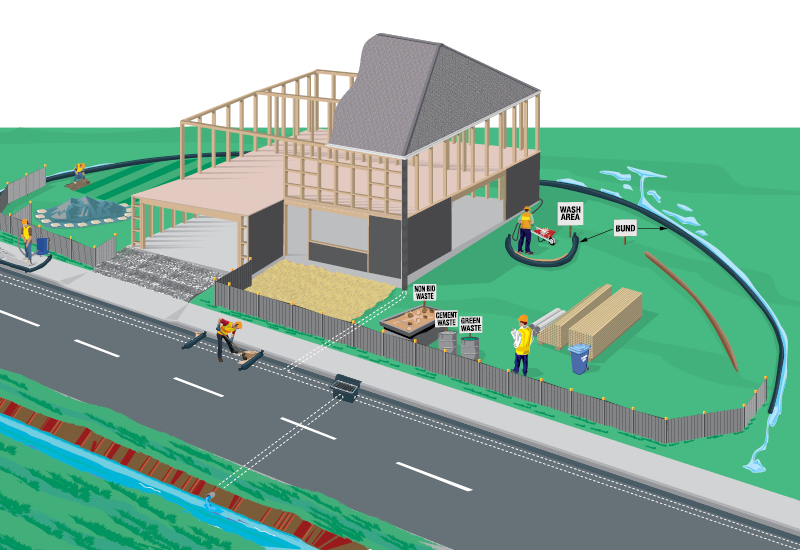
Sediment control diagram


Was this information helpful?


Phone +64 7 577 7000

Email info@tauranga.govt.nz

Visit us Find a community hub

Quick links
Property search
Transfer stations
Cemetery search
Tauranga City Plan
Careers
Contact us

Our sites
Let's talk Tauranga
What's On Tauranga
Tauranga City Airport
Building Consents Online
The Historic Village

Baycourt
Tauranga City Libraries
Beachside Holiday Park
Newsbeat

Shielded site

Tauranga City Council, Private Bag 12022, Tauranga, 3143, New Zealand |Terms of use|Privacy statement|Site map

How can we help you?
Back To Top